Are you torn between a character-rich loft and a sleek modern condo in the West Loop? It is a common crossroads for Chicago buyers who love this neighborhood’s energy and access. You want the right space, with the right feel, and the right long-term value. In this guide, you will learn the real differences between true lofts and modern condos, how those differences affect daily living, financing, and resale, and what to look for on tours. Let’s dive in.
West Loop choice: loft or condo
The West Loop and Fulton Market blend historic industrial buildings with new residential development. That mix creates two clear paths. A converted loft offers dramatic volume, exposed structure, and one-of-a-kind character. A modern condo offers finished convenience, stronger amenities, and more predictable systems. Your best fit comes down to how you live, what you value, and how you plan to finance.
Key differences at a glance
Origin and construction
- Converted lofts began as warehouses or factories that were adapted for residential use. You will often see masonry or heavy timber structure left exposed, with oversized windows and very high ceilings.
- Modern condos are purpose-built to current residential codes. They use contemporary wall, floor, and fire separation systems that usually improve privacy and predictability.
Layout and finishes
- Lofts emphasize openness and raw finishes. Expect exposed ductwork, concrete or timber ceilings, and large open areas that can be flexible but may be less defined.
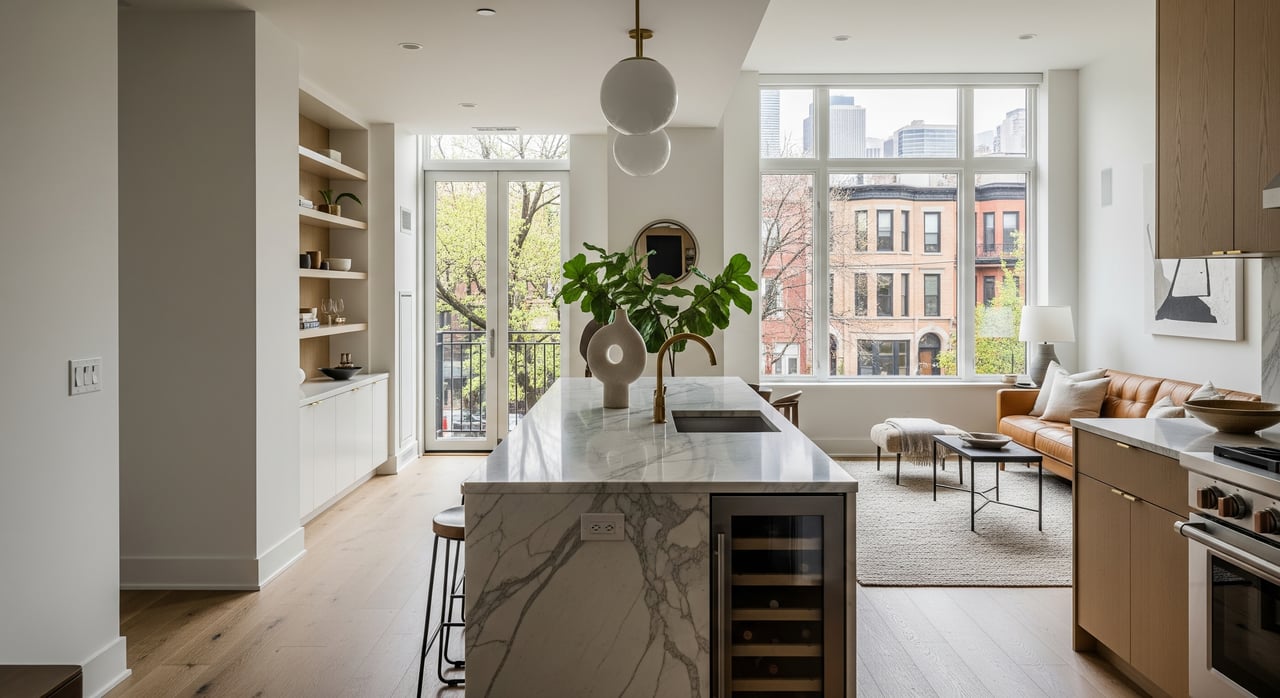
- Modern condos come with finished kitchens and baths, framed walls, and built-in closets. Mechanical systems are usually concealed and consistent across units.
Sound and privacy
- In converted lofts, sound depends on the structure. Concrete slab buildings often buffer noise better than older wood or heavy-timber assemblies. Open layouts can let street or mechanical sound carry.
- Modern condos typically meet current sound rating standards between units. With more partitioned rooms, you will usually experience better privacy on average.
Storage and practicality
- Lofts often trade storage for volume. You may get fewer closets, limited built-ins, and more need for custom storage solutions.
- Condos typically include coat and linen closets, pantries, and laundry rooms. If you rely on storage and organization, condos usually make daily life easier.
Light, views, and access
- Lofts feature large, deep-set factory windows and dramatic daylight. You may have fewer walls for cabinets, and orientation matters a lot.
- Modern condos often provide floor-to-ceiling window runs, balconies, and higher-floor views. Newer buildings also tend to have multiple elevators and wider corridors.
HOA, insurance, and financing
Condo governance essentials
- Every building’s declaration and bylaws control policies on pets, rentals, renovations, budgets, reserves, and special assessments. Review these documents to understand the rules and the financial plan.
- The HOA’s budget and reserve fund should be healthy. Weak reserves increase the chance of special assessments.
- Insurance is carried on a master policy that may be bare walls-in or all-in. Confirm what the master policy covers, and what interior finishes you must insure yourself.
Converted loft specifics
- Historic or landmark status can limit exterior changes and may increase the cost of some repairs. This is part of what preserves neighborhood character.
- Check that the conversion holds a valid certificate of occupancy for residential use. Older projects may have unique permits or grandfathered conditions that you should verify.
- Some conversions include mixed-use or commercial condo structures. These can affect governance, taxes, or allowable uses.
Financing and appraisal
- Appraisals for modern condos often rely on straightforward unit comparisons and price-per-foot metrics.
- Unique lofts can be harder to appraise because there are fewer true comparables. That can trigger closer lender scrutiny or appraisal gaps.
- Some lenders require building-level approvals, minimum reserve levels, acceptable owner-occupancy percentages, and no significant litigation. Smaller associations or certain conversions may not meet FHA or VA approval, which can limit loan options.
- Conventional financing works well for many well-managed associations, but lenders will still evaluate HOA health and any special assessments.
Insurance and taxes
- Older conversions can carry higher insurance premiums due to systems and materials. Confirm what the master policy covers and price your unit policy accordingly.
- Property taxes in Cook County depend on assessed value and applicable exemptions. Review recent tax bills for the specific unit, not just building averages.
Amenities and lifestyle fit
Converted loft amenities
- Amenities vary widely. Some boutique conversions offer only basic services, storage lockers, or bike rooms. Parking can be limited or paid separately.
- Larger loft communities may add a door staff, rooftop areas, or landscaped courtyards, but offerings are building-specific.
Modern condo amenities
- Many modern developments deliver concierge or door staff, on-site management, package rooms, fitness centers, rooftop decks, pet facilities, and structured parking.
- If convenience and services matter, modern condos in the West Loop and Fulton Market often provide a stronger amenity stack.
Street life and noise
- The West Loop is lively, with clusters of restaurants and nightlife. Street-level or lower-floor lofts may feel closer to that action and sound.
- Higher-floor condos usually soften street noise and provide more separation from busy corridors.
Resale and marketability
Buyer pool and demand
- Lofts attract buyers who value architecture, historic character, and flexible space. These homes can command premiums when the right buyer falls in love.
- Modern condos appeal to a broader audience, including first-time buyers, downsizers, and investors who want predictable maintenance and amenities. That usually increases resale liquidity.
Appraisal and comps
- Loft uniqueness can make valuation more subjective. Features like 18-foot ceilings, original beams, or mezzanines can add value, but not every appraiser will weigh them the same way.
- Condos typically offer more consistent comps within the same building or nearby buildings, which can make pricing and financing smoother.
Decision framework
Clarify your priorities
Ask yourself:
- Do you want industrial character and volume or finished convenience and services?
- How important are storage, defined bedrooms, and a fully built-out kitchen and bath suite?
- Are you sensitive to noise from neighbors, elevators, or the street?
- Do you need FHA or VA financing?
- How important is broad resale appeal versus a niche, design-forward property?
Good fit signals
- Choose a loft if you prize open space, historic details, and flexible layouts, and you are comfortable customizing storage and finishes.
- Choose a condo if you value ease of living, strong amenities, and predictable systems, and you want more straightforward financing and resale.
What to request and ask
Documents to obtain
Request these before or during your contract period:
- HOA budget and recent financials, including reserve balances
- Association meeting minutes from the last 12 to 24 months
- Declaration, bylaws, house rules, and a unit survey or plat
- Master insurance summary stating bare walls-in or all-in
- Reserve study, if available, and notes on planned capital projects
- Certificate of occupancy and any change-of-use permits for conversions
- A list of recent special assessments and the reason for each
- Percent of unit owner delinquencies and rental versus owner-occupied data
- For conversions, documentation on mechanical and electrical upgrades and code compliance
Questions for HOA or seller
Ask the listing agent, HOA manager, or seller:
- Is the building FHA or VA approved? If not, why?
- What does the master insurance policy cover, and what must owners insure?
- Are there planned capital projects, recent special assessments, or any litigation?
- What is the current reserve balance, and has a reserve study been done?
- Are there pet restrictions, rental caps, or subletting rules?
- For lofts, are there any landmark restrictions that could affect windows or exterior changes?
- How is parking handled? Is it deeded, assigned, leased, or wait-listed? Any EV charging options?
- What are typical monthly utilities for this unit?
What to test on tour
Unit checks
- Measure ceiling height and identify columns or chases that affect furniture layout.
- Open closets and cabinets to gauge real storage capacity.
- Listen for elevator noise, neighbor footsteps, and street sound at various times of day.
- Test faucets, drains, and climate controls, and ask about age of HVAC, water heater, and windows.
Building checks
- Look at window seals, exterior masonry on conversions, and the roofline for signs of water intrusion.
- Review the most recent elevator, pest, or fire-safety reports if available.
- Note elevator count, corridor width, and package room capacity for daily convenience.
Next steps
- Get pre-approved with a lender that underwrites condo projects and can explain any building-level requirements.
- Shortlist properties based on character versus convenience, storage needs, noise tolerance, and budget.
- For each property, request and review HOA documents with your agent and an Illinois attorney experienced in condos.
- Order a condo-focused inspection. Confirm insurance needs in line with the master policy.
- Verify parking and storage terms in writing, including any seller representations or warranties.
Choosing between a loft and a condo in the West Loop comes down to lifestyle and risk tolerance. If you value space, texture, and history, a true loft can be an inspiring home. If you want polished finishes, clear rules, and strong amenities, a modern condo can deliver daily ease and stronger resale breadth. If you would like a local, hands-on partner to help you compare buildings, review HOA health, and plan for resale, connect with Kandyse McCoy Cunningham for a concierge, owner-led experience.
FAQs
What is a true loft in the West Loop?
- A true loft is a residential unit converted from an original industrial building, often with exposed structure, large factory windows, and very high ceilings.
How do sound levels compare between lofts and condos?
- Modern condos typically have code-compliant sound separation and more interior walls, while lofts vary by structure and open plans can let noise travel more.
Why do financing requirements differ by building?
- Some lenders require building approvals, reserve levels, and owner-occupancy minimums, which not every condo association or conversion meets, especially for FHA or VA loans.
Do lofts have less storage than condos?
- Often yes; lofts trade storage for open volume, while modern condos usually include more closets, pantries, and laundry rooms.
Are special assessments more common in conversions?
- Older buildings can face periodic capital projects for roofs, facades, or systems, which may lead to special assessments if reserves are low.
What documents should I review before making an offer?
- Ask for HOA financials, minutes, declaration and bylaws, master insurance summary, reserve study, certificate of occupancy on conversions, and a list of recent assessments.