Orland Park History Hike Stops Worth Seeing This Fall
September 3, 2026
September 3, 2026
Drive past Orland Square on a Saturday and you're looking at the version of Orland Park most people carry around in their heads: mall traffic, drive-through lines, a strip of national retailers that could be anywhere in the Chicago suburbs. But a short drive from that same parking lot sits a working farmhouse that a single family has occupied since before the Civil War, and their descendants are still on the land today. That contrast is not a coincidence of geography. It is the actual shape of how this village grew, and this fall the Village of Orland Park is handing residents a reason to go see it for themselves.
The Recreation and Parks Department's History Hike runs from August 3 through October 3, 2026, tied to the Heritage Sites program that the village runs out of its Recreation and Parks office. It is the kind of thing you can easily scroll past on the village calendar between a plan commission meeting and a Labor Day safety notice. But treated as a walking itinerary rather than a line item, it points straight at the part of Orland Park that longtime residents drive past without registering.
Orland Park's earliest documented settler was Henry Taylor, who arrived in what was then called "Orland" in 1834. Within a few years, families with names like Myrick, Hostert, Cooper, and Humphrey had followed, and the Hostert brothers built log cabins that became some of the first permanent homes on that land. Ten years after Taylor's arrival, in 1844, Philip Stellwagen bought 80 acres in neighboring Frankfort Township. After his son Mathias married in 1859, Philip added another 80 acres, this time with a farmhouse, in Orland Township. That second parcel is the present-day site of Stellwagen Farm.
This is not a case of a historic name attached to a redeveloped lot. The farm has changed size and function since Mathias Stellwagen's marriage in 1859, but direct descendants of Philip Stellwagen still work the land today. Few subdivisions in the Chicago suburbs can point to a single family's continuous presence on the same acreage for that long.
Here is the part that reframes how most residents think about their own village. Orland Square Mall opened in 1976 and became, after a renovation in the 2010s, the largest mall in the Chicago Southland, anchored by Macy's, JCPenney, and Von Maur with more than 150 stores under one roof. That is the Orland Park most people picture first.
But the subdivisions and commercial strips that now ring Stellwagen Farm did not arrive until the 1980s, a full decade after the mall had already opened its doors. For years, a functioning farm sat inside a village that was simultaneously building one of the region's largest retail centers. The mall did not replace the farm. It grew up alongside it, and the farm won the long game of staying put.
That sequencing matters if you have ever wondered why a handful of streets near the old Village Hall still feel like a different town stitched into the newer one. They are. The Old Orland Historic District, which includes both Stellwagen Farm and the nearby Humphrey House, is the physical leftover of the village that existed before anyone was debating parking lot capacity.
The Orland Park History Museum occupies the old Village Hall and covers close to two centuries of local history through the kind of material a family accumulates rather than curates: diaries, farm equipment, quilts, photographs, and blueprints from a village that grew from a rural crossroads to a Chicago Southland suburb in about a hundred years. Down the road, Humphrey House hosts the Heritage Sites program's seasonal events, including a turn-of-the-century luncheon that puts you inside a building built for a settler family rather than a stage set of one.
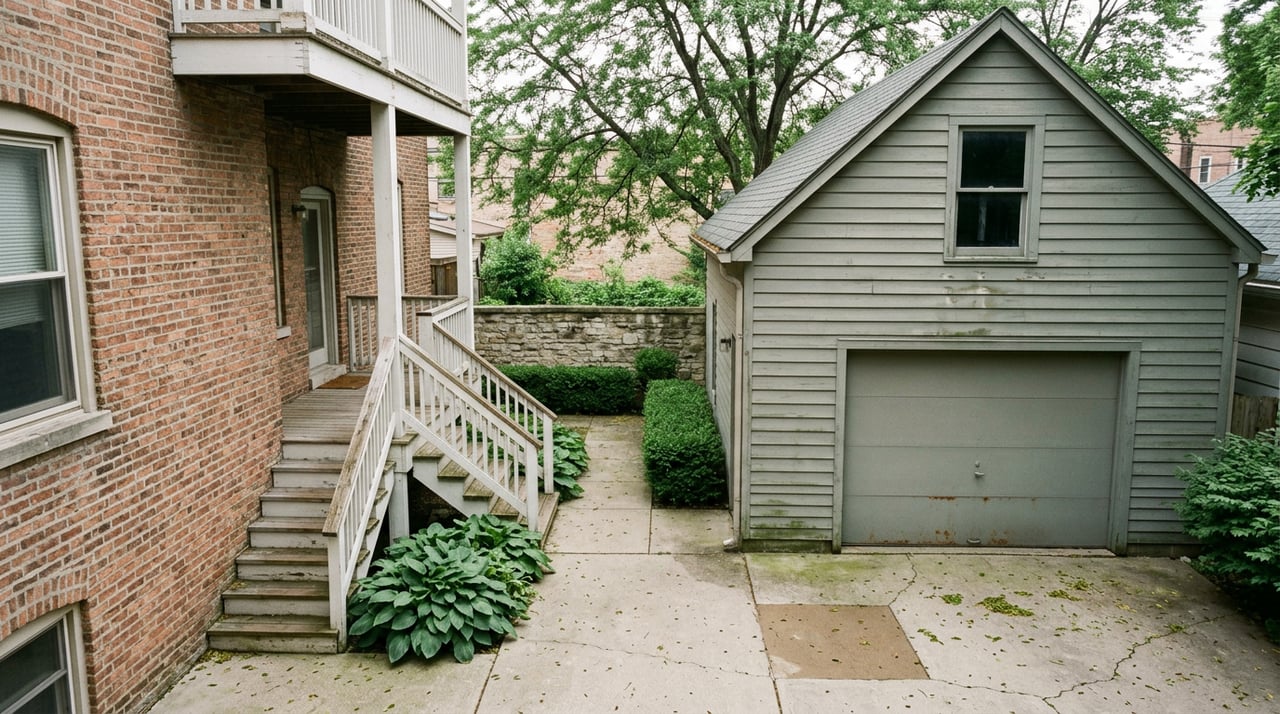
Stellwagen Farm itself is not a museum exhibit behind glass. It is a farmhouse and outbuildings that the Heritage Sites program uses for hands-on programming, from garden classes to seasonal makes-and-takes, run by a staff that answers directly to a Heritage Sites Supervisor rather than a generic parks hotline. If you want to confirm hours or ask about a specific stop before you go, the Recreation and Parks Department takes heritage site questions directly at 708-403-5000 or by email at [email protected].
None of this is hidden. It has just been sitting a few blocks from retail corridors that get all the visual attention, waiting for a resident to treat an ordinary Saturday like an actual itinerary instead of a drive-through errand.
If you want to extend the outing past the historic core, Orland Park sits inside a forest preserve and trail network that rewards exactly this kind of fall walking, even if the trails themselves are a separate stop rather than a literal continuation of the historic district.
None of these trails were built to shuttle you between heritage sites. But they occupy the same shoulder season the History Hike is designed for, and pairing an afternoon at Stellwagen Farm with a loop around Orland Grassland turns one calendar notice into a full day that most residents have never structured for themselves.
Illinois shoulder seasons are short, and this one has a hard end date. Once October 3 passes, the History Hike designation goes away until the village schedules it again, even though the farmhouse, the museum, and the trails themselves are still there year round. The point of the program is not that these places are secret. It is that a dated village calendar entry is sometimes the only nudge a longtime resident needs to actually stop the car.
What the History Hike really demonstrates is that Orland Park's identity as a mall suburb and its identity as a nineteenth-century farm settlement are not competing stories. They ran in parallel for over a decade, and one family's farmhouse outlasted the construction boom that eventually surrounded it. That is a harder, more specific fact than "Orland Park has history," and it is the kind of detail that only shows up once you go stand in front of the actual building.
If you already call Orland Park home and want more of this kind of grounded, specific read on the village, including what's shifting in the neighborhoods and corridors around it, MC Luxury Real Estate Group keeps a close eye on both the market and the community context behind it. Get Access To My Private Listings by reaching out to Kandyse directly.
Stay up to date on the latest real estate trends.